A sandwich eaten in the car between errands and the same sandwich eaten at a table with friends do the same job. Either way, lunch is handled.
At the table, though, other things start to happen. Someone asks where the bread came from. Someone mentions a deli their dad used to take them to. Half a sandwich gets traded so somebody else can try it, and twenty minutes later the conversation has wandered a long way from lunch.
There’s nothing wrong with the car. Some days ten minutes and a sandwich is exactly the right amount of lunch. But the table shows something easy to miss. People have built a huge share of their social life around the plain business of staying fed.
Every person on earth has to eat, and almost nothing about how they do it is the same from place to place. Grain, water and heat became tortillas in one part of the world and injera in another. Each one belongs to a particular kitchen and a particular way of sitting down to eat. It took generations of people working out what grew where they lived, and what was worth handing down, to get there.
Most of that handing down happened without anything being written. Plenty of family recipes still live in someone’s hands. She knows the dough is ready by how it feels. He insists the onions go in first. A kid learns by standing at the counter and getting corrected, and years later makes the dish for a family of their own, maybe in another country, with substitutes for whatever the new grocery store doesn’t carry. The recipe changes a little each time, which is usually how it survives.
Culture tends to get described as something a group has, like an inheritance kept in a drawer. Food shows how much of it is something people do. A recipe lasts because somebody keeps making it, and a child takes part in a tradition long before anyone explains what it means. Food also lets an outsider in early. A stranger can sit down to an unfamiliar dish and meet something another family values before learning a word of their language.
That’s a beginning, and only a beginning. Eating someone’s food doesn’t mean understanding their life or treating them fairly once the plates are cleared. Tables have always drawn lines too, about who gets invited, who sits where, and who cooks and cleans while everyone else talks. A meal makes room for a relationship. The people at it decide what kind.
Boise has more of this going on than most people notice. Since 2004, the Idaho Office for Refugees has run a program called Global Gardens, which rents farmers a fifth of an acre at a time on plots around the Treasure Valley for a couple hundred dollars a year. In 2023, Safiya Abdi, who is from Somalia and grew up in Kenya, was growing carrots, beets, cherry tomatoes and kale there under the name Safari Farms and selling them to Boise customers. “I love being a female farmer,” she told the Idaho Capital Sun.
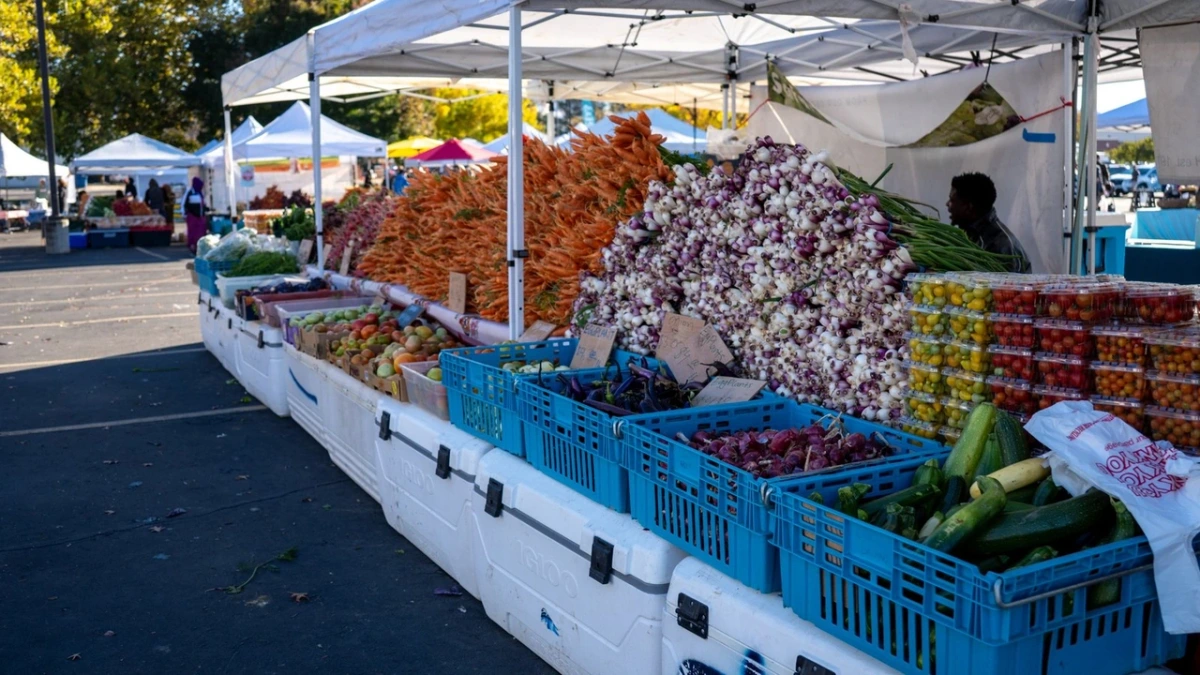
The Boise Farmers Market was set up around the same kind of exchange. Nearly all of its vendors sell food or farm products, and the market says its purpose includes cultivating new farmers and incubating new food ideas. The person handing over the tomatoes is often the one who knows why they look different this week. Plenty of shoppers just grab their vegetables and go, and that’s fine. The chance to ask is still there most Saturdays of the year.
The Idaho Office for Refugees also keeps a list of more than two dozen restaurants, food trucks and markets run by people who resettled here, from Ethiopian and Eritrean cooking on State Street to a Bosnian grill and a momo truck. Each one started with somebody’s recipe and a decision to bet a living on it.
That bet needs somewhere to happen, and Boise has already seen what it looks like when that somewhere disappears.
In 2014, a city planner and an architect turned a run-down, partly burned strip mall on the Bench into the Boise International Market. It was meant to work as an incubator for small businesses. By spring 2015, it housed 27 vendors and restaurants, many run by refugees, with Ethiopian, Turkish, Somali, Colombian and Iraqi food alongside barbecue. In September 2015, the building burned down, and the market never came back.
A handful of vendors regrouped for a while one day a week in a downtown meeting room. “One day a week is definitely not enough to have a stable income,” an Afghan coffee shop owner told Boise State Public Radio. A few found spaces of their own. Abdul Mukomwa and Kutukira Mberwa reopened their African clothing and accessories shop on Vista Avenue. “If another location like the Boise International Market opens, I’ll be the first one to sign the contract,” Mukomwa said.
The vendors still knew how to cook and what to sell. What they lost was a cheap, shared room where a newcomer could find out whether Boise wanted what they had to offer without staking everything on a lease of their own.
Idaho made the first step easier this year. A law that took effect in March lets home cooks sell far more of what they make straight to customers, including sauces, pickles and other perishable foods that used to require a licensed kitchen. It stops at the counter. The law doesn’t cover restaurant-style service or food made and served on site to be eaten right away. Turning a family recipe into a lunch counter or a food truck still means a different set of rules, somewhere to operate, and the cost of serving customers every week.
Boise has plenty of aging strip malls. Whenever one comes up for a new plan, the city, the developer and the lender should all ask whether there’s room in it for someone with a family recipe and not much money. That might be a few small counters and a shared kitchen, with leases short and cheap enough to take a chance on.
Most of this starts much smaller than a building, though. Somebody spends an afternoon getting a dish right, sets it in front of you and says, try this. Then they watch your face.
You take a bite. You ask how they made it. Now there’s a conversation that wasn’t there before.