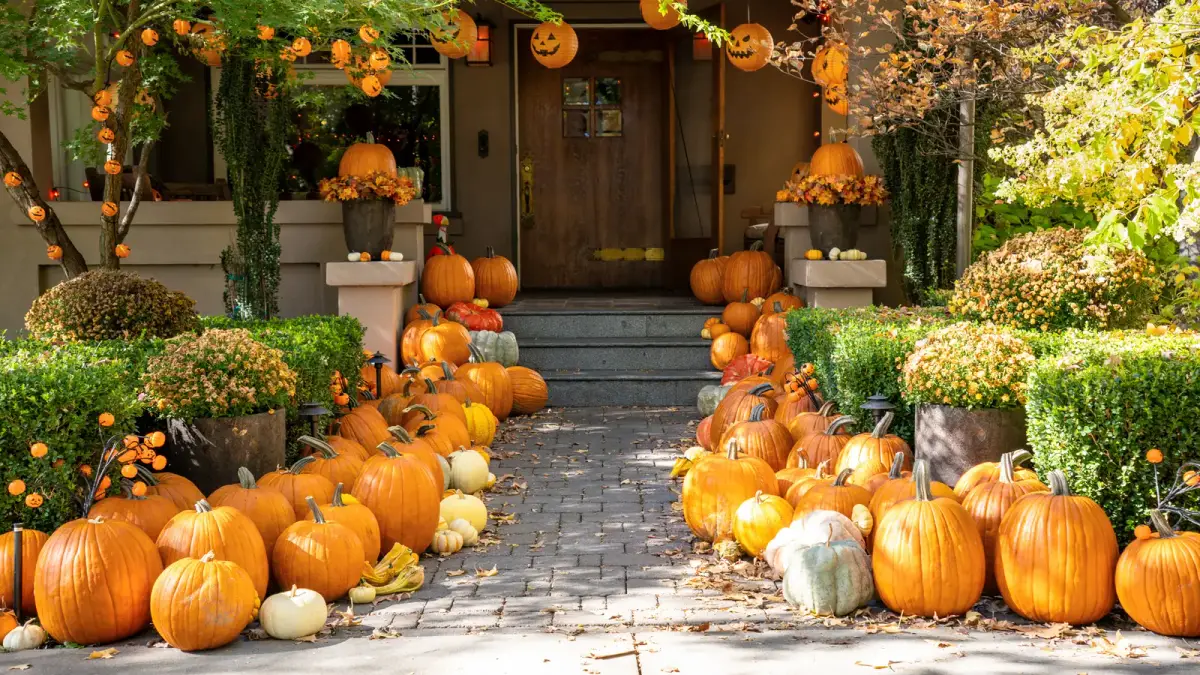
On most nights of the year, if someone dressed as a dinosaur walked up to a stranger’s house and asked for candy, a few questions would follow. On October 31, the person answering the door might apologize for running out.
The costume could be falling apart by dinnertime, and the kid might be dragging a pillowcase that’s getting harder to carry. None of that needs explaining. Three words will open doors all over the neighborhood, provided somebody is home and wants to take part. Nobody called ahead, which is a strange thing to say about visiting people you’ve never met.
On Boise’s Harrison Boulevard, this small exchange has grown into quite a production. In 2022, the Idaho Statesman found a front yard full of oversized mushrooms and people dressed as gnomes, with a sign announcing, “Gnomes are Gnice!” Farther along, six neighbors had turned an alley behind their homes into Spook Alley. When the Ada County Highway District closed the boulevard to traffic the following Halloween, officials expected about 10,000 visitors.
The visitors know which night to arrive. A decorated house with a porch light on usually tells them where to stop, and “trick or treat” saves everyone from having to make conversation before the candy comes out. If a household isn’t participating, the light can stay off. No one has to promise to receive visitors just because they live on the street.
Ordinarily, the short path between a sidewalk and a front door is for invited guests, deliveries, and people with some business at the house. Try walking up it on a Tuesday evening simply because you feel like saying hello. You could be interrupting dinner or getting somebody out of the bath. Halloween gives that bit of private space another use. A child can climb the steps, accept a chocolate bar, and head back out to the sidewalk without either person feeling obliged to make an evening of it.
A block party usually needs one neighbor to pick an afternoon, ask everyone to come, and follow up with reminders. The Halloween invitation is already understood before the first child puts on a costume.
It still takes work. Harrison residents spend days putting out decorations, and somebody has to buy all that candy. One homeowner told Idaho News 6 in 2024 that he hands out between 2,500 and 3,000 pieces each year. Another resident, Lisa Hudson, recalled that on her first Halloween there, her husband had to make two trips out for more candy. That was thirty-one years before the interview.
A nine-year-old visitor in 2022 had done some building of his own. He’d made a vending-machine costume, complete with flashing lights, real candy behind a clear covering, and a five-dollar bill sticking out of a slot. He told the Idaho Statesman he'd already collected three full-size candy bars.
Earlier in American Halloween history, a front door was a tempting target for mischief. Pranksters tied together the doorknobs of facing apartments, so neither occupant could open their door. Others soaped windows, damaged property, or found still more elaborate ways of annoying the people inside. You have to admire the ingenuity of the doorknob trick, though the residents presumably had other views.
Going door to door was hardly a new idea. Older European practices of souling and guising brought people to houses in search of food or treats. As Halloween grew rowdier in American towns and cities, adults tried to steer the night away from vandalism. Communities arranged parties and encouraged children to visit neighbors for sweets. In 1942 the Chicago City Council even voted to replace Halloween with “Conservation Day.” It’s a remarkably dull name for a holiday that had already survived for centuries, and the plan did not take hold.
The familiar candy exchange was catching on anyway. By the late 1930s, magazines were explaining trick-or-treating to American families. Wartime sugar rationing limited the supply of treats, but the custom spread more widely after World War II, particularly in growing suburbs with plenty of children and front doors. A 1952 Donald Duck cartoon helped acquaint even more people with the routine. Within a generation, children who might once have been encouraged to pull pranks were learning to ring the bell and ask politely instead.
Harrison has built its own larger celebration around that simple routine. People come from across the Treasure Valley for the decorations, and it’s easy to understand why. But the same custom works on a street without a haunted alley or any especially inventive lawn ornaments. A child might knock on the door three houses from home and discover that the person handing over a candy bar is someone the family passes on ordinary mornings. Next time they meet, there might be a reason to wave.
In 2020, when COVID-19 made the usual Halloween crowd and door-to-door exchange risky, people in Boise’s North End tried something else. They organized a self-guided tour of decorated homes, complete with a map and scavenger-hunt questions. For a week before Halloween, families could explore the neighborhood and look for things in the displays. There would be no candy exchange on the tour. Instead, organizers invited voluntary donations to Camp Rainbow Gold, which serves Idaho children with cancer.
The map sent families well beyond Harrison, to other North End streets. At one stop children had to figure out what a T-rex was holding; at another, what job the pumpkins had. Apparently even the pumpkins needed careers. Each house gave visitors something to find, and the next clue sent them along the sidewalk to another. People could join in when they liked, without lining up on Harrison or standing at somebody’s door waiting for candy.
Organizers ran the tour again in 2021, and this time their website called it the Annual Halloween Tour. There were still maps to make and decorations to put up, but a family could decide to take a walk and know what they were looking for.
On November 1, the porch light goes back to lighting the steps. The dinosaur who knocked the night before can’t reasonably expect another candy bar, even if the costume survives another outing. By next October, a child new to the block will know which doors to try.